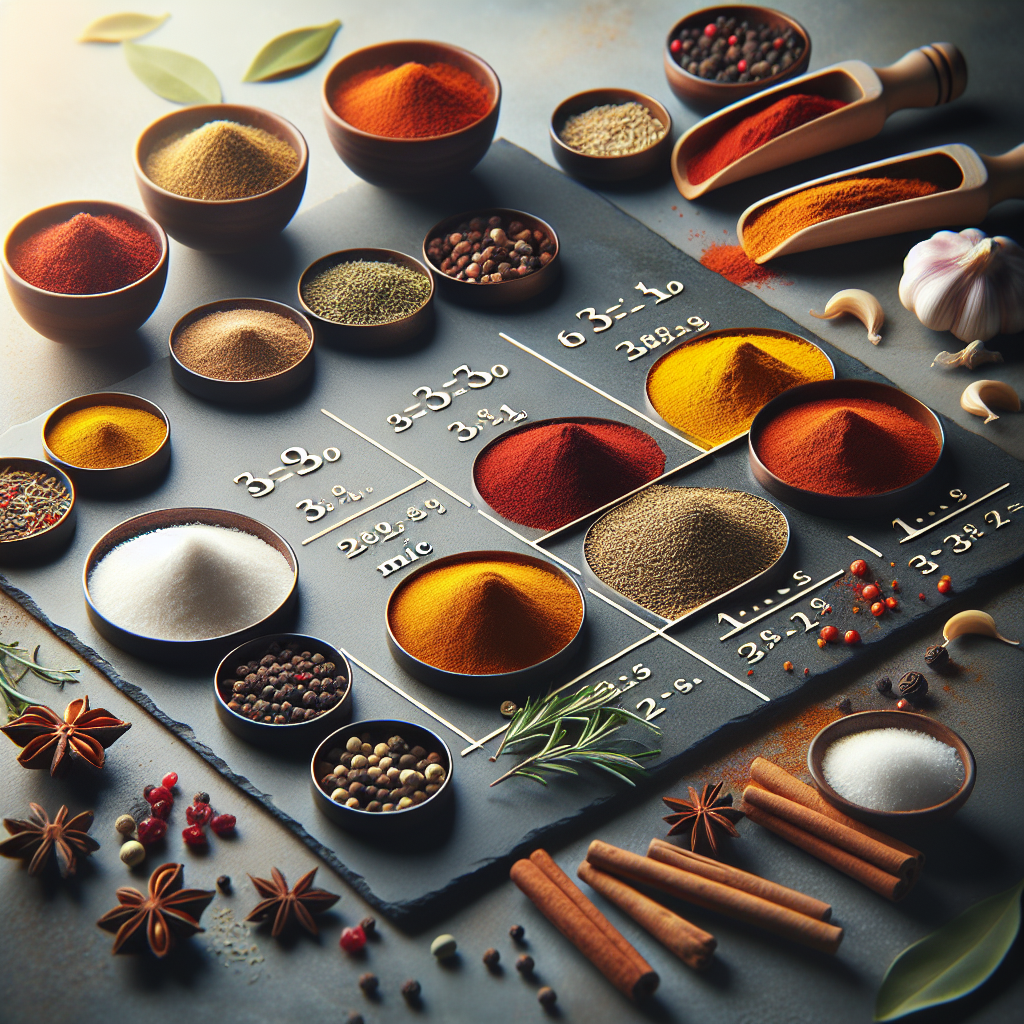
Spices have been an integral part of culinary traditions around the world. They add depth, aroma, and a burst of flavor to any dish. However, the art of blending spices is not just about combining different ingredients; it’s about achieving the perfect balance that brings out the best in each component. Understanding spice mix ratios is key to mastering this art, ensuring that each dish you prepare is a flavorful success.
The Science Behind Spice Blending
At the heart of a great spice blend is the science of ratios. Every spice has its own flavor profile, intensity, and role in a dish. Some spices are bold and assertive, while others are subtle and act as background notes. The right ratio ensures that these flavors complement rather than overpower each other.
Understanding Spice Profiles
Before delving into ratios, it’s essential to understand the flavor profiles of different spices:
- Sweet: These include cinnamon, vanilla, and nutmeg, which add warmth and richness.
- Savory: Spices like cumin, coriander, and thyme fall into this category, offering earthiness.
- Spicy: Chili powder, black pepper, and cayenne bring heat and intensity.
- Bitter: Turmeric and fenugreek provide a slightly bitter undertone that can balance sweetness.
- Aromatic: Spices such as cardamom, cloves, and star anise add a fragrant touch.
Building the Perfect Spice Mix
Creating a spice blend is akin to composing a symphony. It requires an understanding of how each component contributes to the overall flavor. Here are some steps to guide you:
Selecting Your Base
The base of your spice blend sets the tone. For example, a curry powder might begin with turmeric as a base, while a barbecue rub might use paprika. The base should comprise about 40-50% of the total blend.
Adding Supporting Flavors
These spices complement the base and should make up about 30-40% of the blend. In a curry powder, cumin and coriander might serve as supporting spices, while garlic powder and mustard powder could support a barbecue rub.
Incorporating Accents
Accent spices are potent and should be used sparingly, about 10-20% of the mix. These include spices like cayenne, which adds heat, or cardamom, which adds a sweet, floral note. A little goes a long way.
Common Spice Blend Ratios
Here are some classic spice blends and their typical ratios to get you started:
Garam Masala
- 40% Coriander
- 20% Cumin
- 15% Cardamom
- 10% Black Pepper
- 10% Cinnamon
- 5% Cloves
Cajun Spice
- 40% Paprika
- 20% Garlic Powder
- 15% Onion Powder
- 10% Black Pepper
- 10% Cayenne Pepper
- 5% Oregano
Herbes de Provence
- 30% Thyme
- 30% Rosemary
- 20% Savory
- 10% Basil
- 10% Lavender
Experimentation and Adjustment
Once you have a basic understanding of spice ratios, it’s time to experiment. Personalizing spice blends is a rewarding process, allowing you to tailor flavors to your taste preferences. Here are some tips for successful experimentation:
Start Small
Begin with small batches to minimize waste. This allows you to tweak ratios without committing to a large quantity.
Record Your Creations
Keep a detailed record of your blends, noting the exact ratios and any adjustments. This helps in replicating successful mixes and avoiding past mistakes.
Taste as You Go
Periodically taste your blend during the creation process. This helps you understand how the flavors are developing and if adjustments are needed.
Applications of Spice Blends
Spice blends have versatile applications in the kitchen. They can be used as rubs for meats, flavor enhancers for vegetables, or bases for soups and stews. Here are some ideas:
Marinades
Combine your spice mix with oil, vinegar, or yogurt to create a flavorful marinade for proteins.
Seasoning for Roasted Vegetables
Toss vegetables in olive oil and your spice blend before roasting for a burst of flavor.
Sauces and Soups
Add spice blends to sauces and soups for depth and complexity.
The Cultural Significance of Spice Blends
Spice blends are deeply rooted in cultural traditions. For instance, Ras el Hanout is a staple in North African cuisine, while Za’atar is essential in Middle Eastern dishes. Understanding the cultural context of these blends can enhance your appreciation and use of them.
Conclusion
Mastering spice mix ratios is a journey of discovery and creativity. By understanding the flavor profiles and experimenting with ratios, you can craft blends that elevate your culinary creations. Whether you’re aiming for the warmth of a garam masala or the fiery kick of a Cajun mix, the right balance can transform any dish into a masterpiece. So, gather your spices, embrace your creativity, and let your palate guide you to perfect flavor harmony.
#ChatGPT assisted in the creation of this article.


