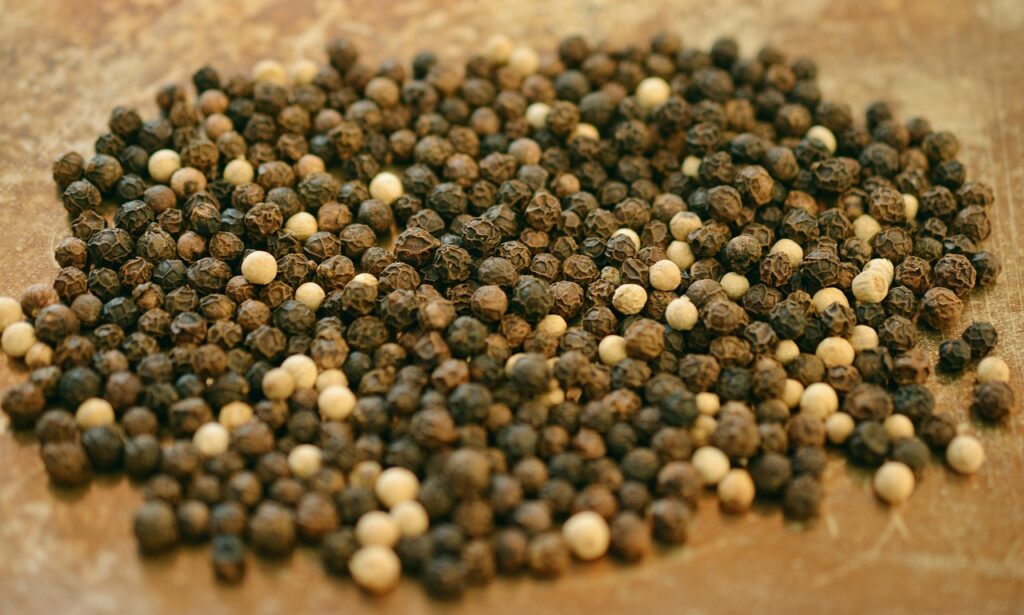
Black pepper, often dubbed the “king of spices,” is a staple in kitchens around the globe. Its pungent aroma and spicy flavor have made it a favorite seasoning for centuries. But beyond its culinary uses, black pepper has a storied past that showcases its significance in global trade, culture, and history. This article explores the fascinating journey of black pepper from its origins in the tropical forests of India to its present-day status as a globally cherished spice.
Origin and Early Cultivation
Black pepper, scientifically known as Piper nigrum, is native to the Western Ghats of India, particularly the regions of Kerala. This area, with its humid climate and rich soil, provides the perfect conditions for pepper cultivation. The spice has been used in Indian cuisine and medicine for over 4,000 years, as documented in ancient texts such as the Vedas.
The early cultivation of black pepper was relatively localized, but its unique flavor soon attracted the attention of traders and explorers. The Malabar Coast, where black pepper was predominantly grown, became a vital hub in the ancient spice trade routes.
Black Pepper’s Role in Ancient Trade
In ancient times, black pepper was a highly sought-after commodity. It was traded along the Silk Road and reached the markets of Egypt, Greece, and Rome. The spice was so valuable in these regions that it was often referred to as “black gold” and was even used as a form of currency.
During the Roman Empire, black pepper became a symbol of wealth and luxury. Roman cooks used it to enhance the flavors of their dishes, and it was a staple in Roman banquets. The spice’s popularity soared, leading to increased trade between the West and the East.
The Medieval Spice Trade and the Age of Exploration
The medieval period saw the rise of Arab traders who controlled the spice trade routes. They transported black pepper from India to the Middle East and then to the Mediterranean via the Red Sea and overland caravans. The spice was a cornerstone of the European economy, and its demand continued to grow.
The quest for black pepper and other valuable spices was a driving force behind the Age of Exploration. European explorers, such as Vasco da Gama, sought new sea routes to India to bypass the Arab-controlled overland routes. In 1498, Vasco da Gama successfully reached the Malabar Coast, marking the beginning of European dominance in the spice trade.
Colonial Influence and the Global Spread
With the arrival of European powers such as the Portuguese, Dutch, and British in India, the global spice trade underwent significant changes. The Portuguese were the first Europeans to establish a stronghold in the Indian spice trade, controlling key ports along the Malabar Coast.
The Dutch and British followed suit, establishing their own trade networks and spice plantations. These colonial powers played a pivotal role in spreading black pepper to other parts of the world, including Southeast Asia, Africa, and the Americas. The spice plantations in these regions contributed to the global availability of black pepper, making it more accessible and affordable.
Modern Cultivation and Production
Today, black pepper is grown in several countries, with Vietnam, Indonesia, and India being the largest producers. Vietnam, in particular, has emerged as the leading exporter of black pepper, thanks to its favorable climate and modern agricultural techniques.
The cultivation of black pepper involves a meticulous process. The pepper vines grow on support trees or trellises, and the berries are harvested when they turn red. They are then sun-dried, causing the outer layer to shrink and darken, resulting in the black peppercorns we recognize.
Black Pepper in Culinary and Medicinal Use
Black pepper’s culinary versatility is unmatched. It enhances the flavor of savory dishes, complements spices in complex blends, and adds a kick to sweet desserts. Its pungency and aroma make it a key ingredient in global cuisines, from Indian curries to Italian pasta sauces.
Beyond its culinary uses, black pepper has long been valued for its medicinal properties. Traditional medicine systems, such as Ayurveda and Traditional Chinese Medicine, use black pepper to aid digestion, alleviate coughs, and improve circulation. Modern research also suggests that black pepper may have antioxidant and anti-inflammatory effects.
Conclusion: The Enduring Legacy of Black Pepper
The journey of black pepper from the forests of India to its current status as a global spice is a testament to its enduring appeal and significance. It has shaped economies, influenced culinary traditions, and played a crucial role in global exploration and trade.
As we sprinkle black pepper onto our dishes today, it’s worth remembering the rich history and cultural significance that accompany each peppercorn. Black pepper’s journey is a fascinating story of exploration, trade, and cultural exchange, underscoring the profound impact spices have had on human civilization.
#ChatGPT assisted in the creation of this article.


